Home04 · Pull Up a ChairFor Students
For students
Your semiconductor journey starts with a conversation.
Curious about semiconductors and no idea where to begin? Good. Nobody at this table started out knowing. Your host began with a diploma from a polytechnic in a fireworks town, and learned the rest standing next to machines.

Start here
Six questions, answered without jargon.
Every one of these links to something you can click and play with, not a wall of text.
How does a wafer become a chip?
Fourteen steps from a grain of sand to a packaged device you could hold. Step through them and watch the wafer change.
Walk the wafer Question 02What actually happens inside a fab?
Eight places inside the building, from the fan-filter ceiling to the subfab pumps, and what an engineer does in each one.
Explore the cross-section Question 03What does a semiconductor engineer do all day?
Nine real roles, what each one is responsible for, and what you would need to learn to do it.
See the roles Question 04What careers exist beyond chip design?
Design is a small slice. Most of the industry is manufacturing, equipment, facilities, test, quality and supply chain.
Look beyond design Question 05What skills will the industry need?
The honest list, from a hiring manager who has built teams of 450 and 500 engineers.
The skills list Question 06How do I become part of India's journey?
What your first ninety days would look like, and the four things you can do before anyone hires you.
Start your ninety daysQuestion 03 · the jobs
Nine real jobs inside a semiconductor plant.
Not job titles from a brochure. These are the people who show up for a shift.
Equipment technician
Keeps tools running. Preventive maintenance, corrective calls, troubleshooting. The most direct way into a fab and the foundation of everything above it.
Diploma / ITI welcome
Equipment engineer
Owns a tool set. Installs, qualifies, sustains and improves. Answers for uptime and for the numbers on the chart.
Diploma or degree
Process engineer
Owns a process step. Films, etch profiles, uniformity, defects and the recipe that makes them repeatable across thousands of wafers.
Degree, often postgraduate
Test & product engineer
Proves the chip works. Test programmes, probe cards, handlers, yield maps and the economics of every second on a tester.
Electronics background
Facilities & utilities engineer
Runs the chemical plant wrapped around the cleanroom. Ultra-pure water, gases, chillers, exhaust, power and the hookups to every tool.
Mechanical / electrical
Cleanroom & facility integration
Gets the building ready for tools. Class certification, raised floors, points of connection and the schedule that ties it together.
Civil / MEP / projects
Automation & data engineer
Connects tools to the manufacturing system, watches sensor traces, builds fault detection and, increasingly, trains models on them.
Software / instrumentation
Quality, EHS & standards
Keeps people safe and product traceable. Gas safety, lock-out procedures, SEMI standards, audits and the discipline behind them.
Any engineering stream
Supply chain & vendor development
Finds and builds the local suppliers a fab needs for spares, consumables and services. Deeply commercial, deeply technical.
Engineering + commercial
Question 04 · beyond design
Chip design is the famous part. It is not the big part.
When people picture a semiconductor career they picture someone writing hardware description code. That job is real and it is excellent. It is also a minority of the people who make a chip exist.
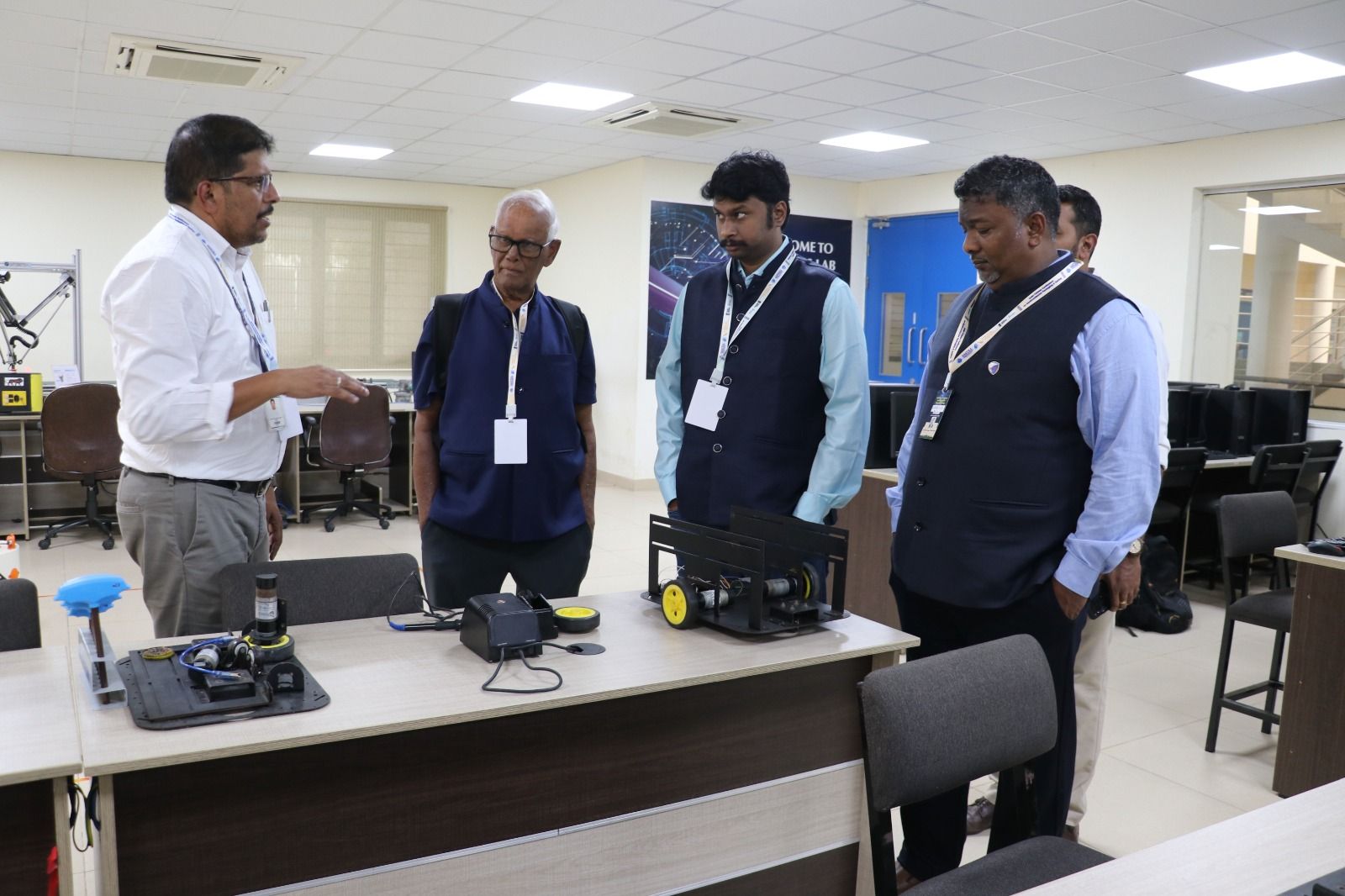
A running fab employs technicians, equipment engineers, process engineers, facilities teams, test engineers, automation specialists, quality and safety staff, planners and supply-chain people, on every shift, every day. That is where the volume of hiring is, and it is where India will need people first.
Question 05 · skills
What actually gets you hired.
From someone who has built a 450-engineer team for global OEMs and a 500-member semiconductor workforce.
- Hands that are not afraid of a machine
Open the panel. Follow the wire. Read the drawing. A candidate who has physically fixed something is easier to train than one who has only studied it.
- Safety instinct, before anything else
Gas hazards, high voltage, lock-out and tag-out, chemical handling. A fab will teach you the specifics, but it wants to see that you take safety seriously from day one.
- Basic statistics you can actually use
Mean, spread, control limits, what an out-of-control point means and what you do about it. You will live inside charts.
- Written communication
A clear handover note, a deviation report, a root-cause summary. Half of engineering is telling the next shift the truth in six lines.
- Comfort with vacuum, gases and thermodynamics
You do not need a doctorate. You do need to understand why the chamber pumps down, why the purge matters and what an exhaust does.
- Some data literacy
Read a sensor trace. Plot it. Spot the drift. Increasingly this is what separates a good engineer from an excellent one.
- The willingness to work a shift
Fabs run around the clock. The people who accept that early get the tool time, and tool time is how you learn.
Question 06 · your first ninety days
What the first ninety days in a fab look like.
This is the rhythm Venkat has used as an on-the-job-training buddy, a shift lead and the builder of a 500-engineer bench.
DAY 01
Safety, gowning, respect for the machine- Fab safety induction: gas hazards, lock-out, emergency routes
- Gown in and gown out until it is automatic
- Walk the ballroom and the subfab with a mentor
- Read one tool's facility-requirements sheet end to end
WEEK 01
Shadow, then assist- Shift handovers: learn what gets said and what gets hidden
- Assist a preventive-maintenance cycle on one tool
- Learn the tool log, the alarm history and the sensor screens
- Meet the process owner and the facilities engineer for your bay
MONTH 01
Own a task, own a number- Perform a maintenance cycle under supervision, sign the checklist
- Track one measure for your tool: uptime, time-between-failures or particles
- First corrective-maintenance call with a buddy
- Explain the tool's gas and vacuum path to a peer
DAY 90
Qualified, and training the next hire- Certified on one tool family; on call for your shift
- Take part in a new-tool install, hookup or qualification
- Present one root-cause analysis to the module team
- Become the training buddy for the next joiner
Start tonight
Four things you can do before anyone hires you.
Learn the vocabulary
Twelve words you will hear in your first week, on flip cards. Learn them and you will follow your first meeting.
02Understand one process well
Pick deposition or etch and go deep. Being genuinely good at one thing beats being vague about ten.
03Get hands on a real tool
A mobile lab, a college tie-up, an internship, a plant visit. Anything that puts you within arm's reach of equipment.
04Ask someone a real question
Most people in this industry will answer a specific, well-asked question from a student. Including this one.
Students always get a chair
Learn. Explore. Connect. Aspire.
Ask a question, suggest your college for a session, or put yourself forward for the Students series. No question is too basic here.